

Anal gland issues in dogs happen when the two scent glands inside the anus fail to empty during bowel movements, causing scooting, licking, a fishy odor, or pain. Most cases come down to soft stools, underlying allergies, or small-breed anatomy — and the fix usually starts with supporting stool firmness through fiber and probiotics, not more frequent manual expressions.
Your dog's anal glands are central to their health but easy to overlook. Knowing how to support them can improve your dog's quality of life and make maintenance far easier on you.
What Are Anal Glands in Dogs?
Anal glands — also called anal sacs — are scent glands. When two dogs sniff each other's rear ends as a greeting, they're reading information about age, sex, and overall health. Tiny sebaceous glands line the inside of the sacs and produce an oily, foul-smelling fluid. That fluid serves a purpose in the wild, but in the modern home it needs to express regularly for the glands to stay healthy.
So why do they fill up? They shouldn't, if everything is working. Full anal glands are a signal that the system has broken down somewhere — usually stool, sometimes anatomy, occasionally both. When they go unemptied for too long, impaction sets in and your dog needs support fast.

![]() Where Are Anal Glands in Dogs?
Where Are Anal Glands in Dogs?
Do all dogs have anal glands? Yes — both dogs and cats have two small glands inside the anus. They sit at the 4 and 8 o'clock positions and range from pea to grape size depending on the animal. They're not visible from the outside and should only be accessed by your veterinarian or someone trained in expression.

Signs and Symptoms of Anal Gland Blockage or Problems
Any dog can develop anal gland issues, though small breeds are overrepresented in my caseload. Here are the signs I tell owners to watch for — in roughly the order they tend to show up.
1. Dog Scooting
Scooting is your dog's way of trying to relieve discomfort — aching, itching, or pressure in the anal area. They drag their rear across a textured surface because it feels better. Scooting is usually the first sign something is off, and it's the one most owners bring to me first.
2. Pain After Having Glands Expressed
Expression isn't comfortable, and mild soreness for a few hours is normal. Pain that lasts longer than 24 hours is not. Persistent pain after expression often means an anal abscess — a pocket of infected tissue that can block the sacs from emptying and snowball into worse complications.
3. Bleeding from the Anus
Bleeding from the rear or bloody stools can point to hemorrhoids, especially if your dog is newly constipated from impaction or low-fiber diet. In more serious cases the cause is a ruptured gland, a ruptured abscess, or damage to the GI tract. Any visible bleeding warrants a same-day vet call. Read about what to do when your dog is bleeding from its anus.
4. Excessive Licking of the Rear End
Like scooting, tail and posterior licking is a discomfort behavior. Dogs lick the area that hurts. Persistent licking points to irritation, inflammation, or infection in the anal tissue itself.
5. Changes in Bowel Movements
Sudden constipation in a dog who was regular is a red flag. When the glands become full or inflamed without emptying, they can swell enough to narrow the anal cavity — which makes it physically harder for stool to pass and leads to straining.
Diarrhea works the other direction but creates the same underlying problem. Loose stool doesn't apply enough pressure against the gland walls to empty them. So the glands stay full, infection risk climbs, and you're back at square one.
Anal Gland Complications and Diagnoses
If you or your vet suspect the anal glands, these are the conditions typically in play.
1. Ruptured Anal Gland
A ruptured gland is alarming to see. Blood can appear in the stool or leak from the anal area between bowel movements. The condition is extremely painful — even the calmest dogs can become aggressive if you go near the tail.
2. Anal Gland Infection
When glands don't empty on schedule, bacteria multiply in the retained fluid and infection sets in. It doesn't matter what started the impaction — viral illness, allergies, diet change — if the glands stay full long enough, infection follows.
3. Abscess in the Anal Gland
Abscesses are infections that have progressed. A mass of pus-filled tissue forms, blocking the canal and creating the possibility of rupture. When an abscess ruptures the symptoms look similar to a ruptured gland and the treatment is just as urgent.
4. Impacted Anal Glands
Impaction is the most common complication and usually the earliest. The glands fill, swell, and push on the GI tract from below, which makes defecation difficult and painful. Catching impaction early is what prevents it from becoming infection or abscess.
5. Allergies
Underlying allergies — including atopy — are a contributing factor I see more often than owners expect. Allergies in dogs show up as red, inflamed skin, and that inflammation reaches the perianal region too, making the glands more susceptible to impaction and infection.
What Causes Anal Gland Problems in Dogs?
In my clinical practice, the single most common thread across anal gland cases is gastrointestinal health — specifically, stool that's too soft to apply pressure on the glands during defecation. Firm, bulky stools express the sacs naturally. Soft or loose stools don't, and the glands sit full until something forces them.
The second most common cause is underlying allergies resulting in anal gland issues, including atopy. Inflammation anywhere on the body is inflammation everywhere, and the perianal area is particularly vulnerable.
Anatomy is third. If the glands are positioned too low or too far internally, they struggle to empty even when stool quality is fine. Small breeds and compact breeds fall into this category most often.
How Digestion Is Linked to Anal Gland Health
Stool consistency and frequency drive anal gland function. Healthy, firm stools naturally express the glands during defecation; soft or irregularly shaped stools don't. Chronic diarrhea or constipation worsen the cycle, leading to pain, swelling, and in severe cases, abscesses.
Diet is the lever most owners can pull immediately. A balanced diet rich in fiber promotes regular bowel movements and firm stool, which is what naturally expresses the glands in the first place. Fiber supplements and high-fiber dog foods are particularly effective for dogs with a history of gland issues.
Addressing digestion through nutrition, hydration, and veterinary guidance prevents most recurrences. Monitor stool consistency the way you'd monitor appetite — it's a fast, daily signal about gland risk.
Which Dog Breeds Are Most at Risk for Anal Gland Issues?
Compact anatomy puts some breeds at higher risk of impaction. Small breeds, toy varieties, dogs under 30 pounds, or dogs shorter than 10 inches at the shoulder tend to need gland expression more often than larger breeds.
Breeds that commonly need more frequent expression include: Basenji, Basset Hound, Beagle, Bichon Frisé, Cairn Terrier, Chihuahua, Cocker Spaniel, Dachshund, English Cocker Spaniel, French Bulldog, Jack Russell Terrier, Lhasa Apso, Miniature Pinscher, Miniature Poodle, Papillon, Pembroke Welsh Corgi, Pomeranian, Pug, Scottish Terrier, Shih Tzu, Silky Terrier, Whippet, West Highland White Terrier, and Yorkshire Terrier. The list is not exhaustive — these are the breeds I see most often in my anal gland caseload.
- Chihuahua: Chihuahuas have some of the smallest anatomy of any dog breed, which makes it harder for their glands to empty on their own.
- Toy and Miniature Poodle: Small anatomy affects gland position, and very small stool size reduces the pressure available to empty the glands during defecation.
- Cocker Spaniel: Compact anatomy and a potentially lower gland position in the anal cavity affect how well Cockers can naturally express.
- Basset Hound: Not the smallest breed, but Bassets have short, compact anatomy that affects bowel movement efficiency. Bassets are also prone to thicker, waxier gland secretions, which raises impaction risk.
- Beagle: Similar compact anatomy and gland position challenges — natural expression is less reliable in this breed than in larger dogs.

Treatment, Relief, and Expressing Dog Anal Glands
Veterinarians most commonly recommend two things: manual expression and increased fiber intake. If your dog is scooting regularly or struggling with new constipation, those are usually the first interventions.
Manually Expressing Blocked Anal Glands
Manual expression is the most recognized treatment for impaction, and it's reserved for dogs whose symptoms have progressed or who need routine expression due to anatomy. It's mildly uncomfortable, so it takes two people — one to hold the dog, one to perform the expression.
With clean, gloved, lubricated fingers, you or your vet milks the glands from the anal area. Both glands must be emptied completely, and the area should be cleaned with a sanitary wipe afterward. Skipping the cleanup step is a common cause of repeat infection in the same dog.
Small dogs may need manual expression as often as once a month. Some dogs never need it. How often comes down to how well you're supporting gland function on a daily basis — which is the part most owners underestimate. For more strategies on reducing the need for manual expression, see our guide on natural ways to promote anal gland expression.
Increased Fiber for Dogs
Fiber bulks up stool, and bulky stool expresses glands naturally. The hard part is that most owners increase fiber too quickly and end up with the opposite problem — bloating, gas, or diarrhea that makes gland issues worse.
The rule I give my clients: start at half the recommended daily dose and stay there for at least a week before moving up. The gut needs time to adjust to the new fiber load. Jumping straight to full dose is the single most common self-inflicted setback I see.
Both manual expression and higher fiber intake for dogs give short-term relief but aren't standalone solutions. Diet and exercise have to carry the long-term load.
How to Look After Your Dog's Anal Glands at Home
Alongside what your vet recommends, there are daily habits that make a measurable difference.
1. Daily Anal Gland Supplement
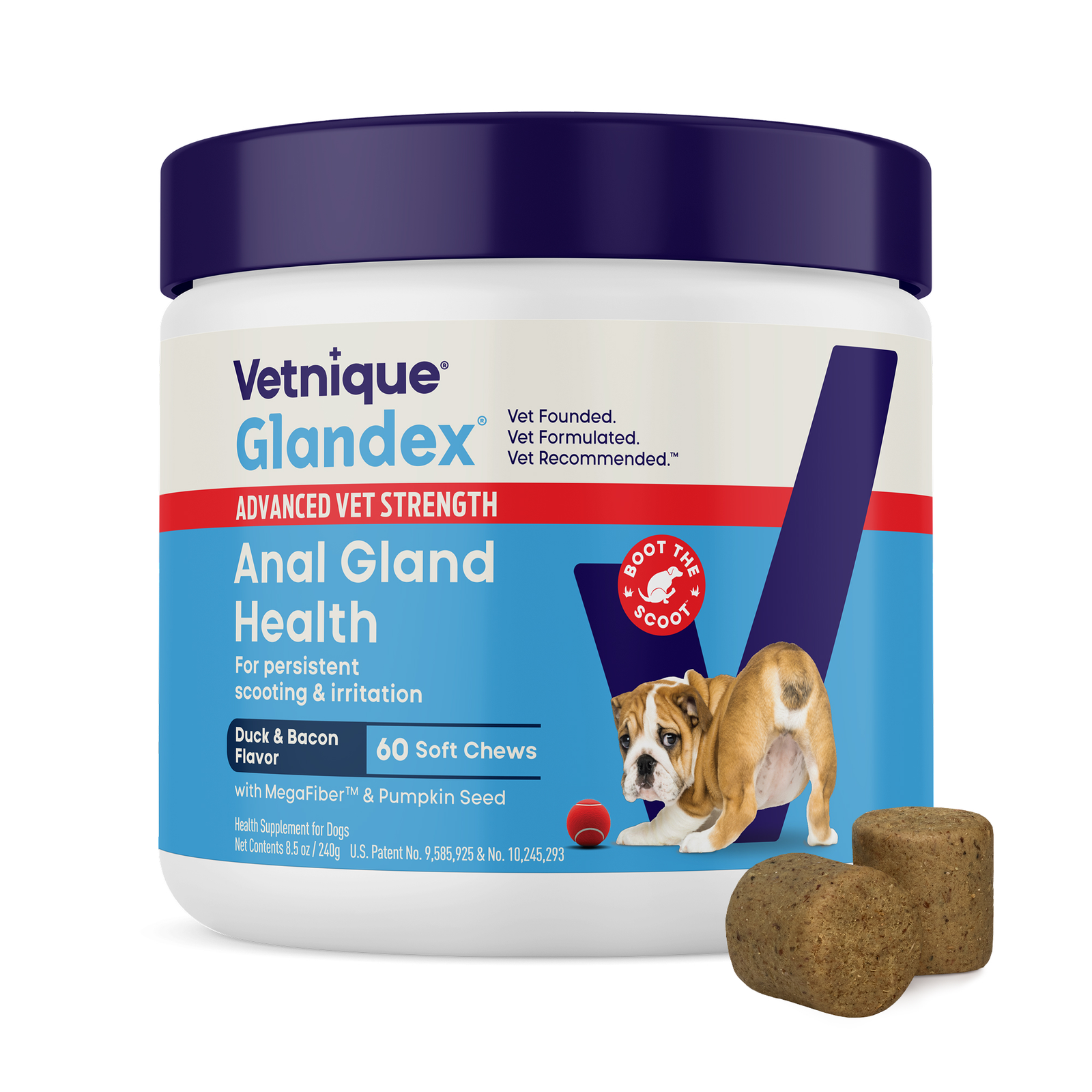
Daily gut support is where most of the improvement comes from. Choose an anal gland supplement that combines probiotics, prebiotics, and fiber to support digestion — with added ingredients like Quercetin to promote a healthy inflammatory response. For persistent or recurring issues, Advanced Vet Strength formulas offer higher-potency support.
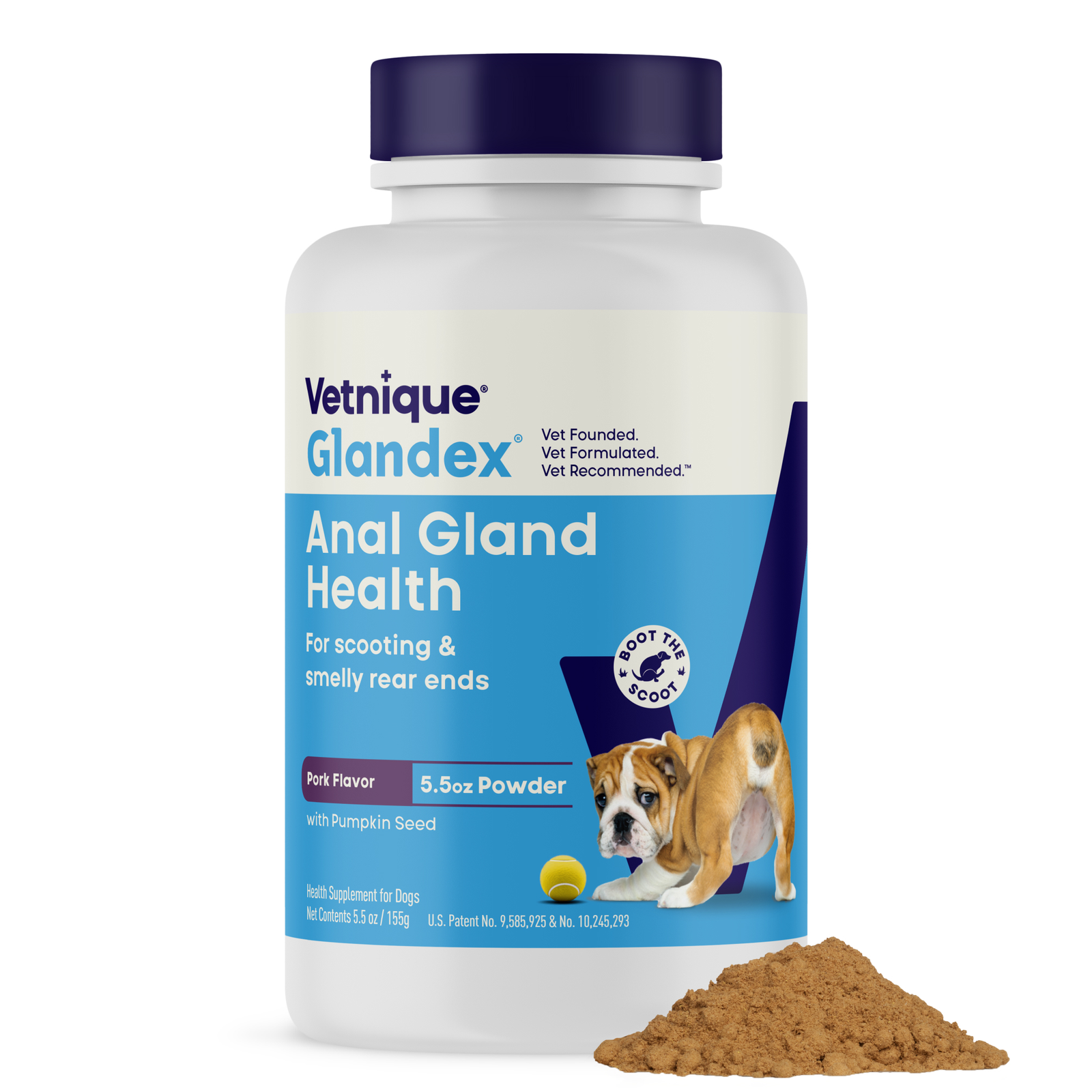
If your dog prefers wet food over supplement chews, a daily support powder mixes in easily to supplement fiber and key nutrients.
2. Regular Exercise
Gut motility — the movement of food through the GI tract — improves with activity. Sedentary dogs have more bowel movement issues, which means more gland issues. Consistent daily activity benefits every aspect of health and helps support normal gland function.
3. Warm Compresses
For anal gland abscesses, a warm wet cloth applied for 10–15 minutes twice daily can encourage drainage before the abscess causes larger complications.
4. Post-Illness Support
After illness, supporting gut recovery matters for anal gland recovery too. The two are linked.
Diarrhea from food intolerance, parasites, or other illness disrupts stool consistency and leaves the glands underserved. Adding fiber during and after an illness helps restore firm stool and regular expression.
Antibiotics are another common setback. They do their job against bacterial infection but also kill off the beneficial bacteria your dog's gut depends on. Re-introducing probiotics and prebiotics after a course of antibiotics helps restore the microbiome — and by extension, healthy gland function.
Contacting Your Vet if Anal Gland Problems Persist
If at-home support isn't resolving symptoms, recognize the warning signs that require professional care. Contact your veterinarian if you observe any of the following:
Rectal bleeding during or between bowel movements. Oozing brown, foul-smelling liquid from the anus between bowel movements. Severe pain or tenderness in the anal or tail base area that makes your dog uncharacteristically aggravated or anxious. Visible swelling around the anal area. Severe constipation that prevents a bowel movement for 48–72 hours or causes pain during defecation. Uncharacteristic lethargy or listlessness. Signs of infection like fast breathing at rest, excessive sleeping, or fever.
Severe cases may require surgery to remove the anal sacs altogether — which is exactly why daily maintenance and knowing your dog's normal patterns matter. Prevention is dramatically easier than treatment.
Frequently Asked Questions About Dog Anal Glands
If you suspect your dog might have anal gland issues, talk to your veterinarian about the best treatment plan.
How often should a dog's anal glands be expressed?
Most dogs naturally express their glands during normal bowel movements and don't need manual expression at all. When anatomy, diet, or a health condition interferes with natural expression, frequency depends on the individual dog — some need it monthly, some more often. Your veterinarian is the right person to set the schedule. Learn more about how often a dog's anal glands should be expressed.
What happens if a dog's anal glands are not expressed?
Unexpressed glands can become impacted, leading to discomfort, swelling, and potential infection or abscess. Untreated, an abscess can rupture and create an open wound near the rectum. Recognize the signs early and consult your veterinarian before the problem escalates.
How do I know if my dog's anal glands are blocked?
Signs of blocked glands include scooting on the floor, licking or biting at the anal area, a distinct foul odor, difficulty or discomfort while sitting, visible swelling near the rectum, or straining during bowel movements. Any of those behaviors warrants a vet call, sooner rather than later.
Can dogs naturally express their own anal glands?
Most dogs do, through normal bowel movements. Stool consistency provides the pressure needed for expression. Soft stools, obesity, or certain anatomical traits can interfere — dogs with those factors may need external help from you or your vet.