

Anal glands are one of those things most pet parents never think about — until their dog starts scooting across the carpet or a strange smell appears out of nowhere. But understanding what anal glands are, how they work, and what can go wrong is the first step toward keeping your pet comfortable and avoiding problems down the road.
Here is what every dog and cat owner should know about anal glands.
What Are Anal Glands?
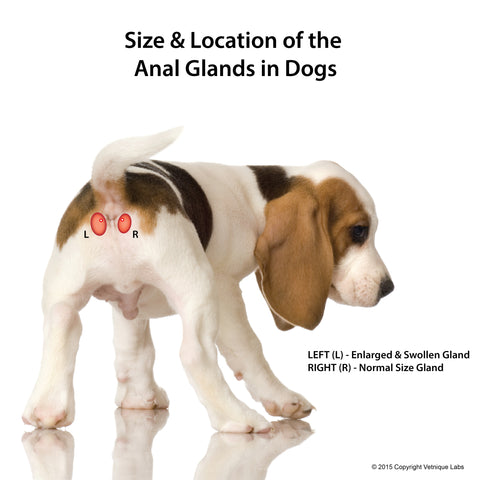
Anal glands — also called anal sacs — are two small glands located internally on either side of your pet's anus, roughly at the 4 o'clock and 8 o'clock positions. They cannot be seen from the outside. All dogs and cats have them, regardless of breed, size, or age.
Each gland contains a small amount of strong-smelling liquid. The purpose of this fluid is scent marking — dogs and cats use it to identify each other. It is one of the reasons dogs are so interested in sniffing each other's rears when they meet.
How Do Anal Glands Normally Work?
Under normal circumstances, the anal glands empty naturally every time your pet has a bowel movement. The pressure of the stool passing through the rectum squeezes the glands and releases a small amount of fluid along with the feces. When this process works correctly, most pet parents never notice the glands at all.
The key to healthy natural expression is stool quality. Firm, well-formed stools provide enough pressure against the glands to empty them fully. When stools are soft, loose, or inconsistent, the glands may not empty completely — and that is where problems begin.
What Causes Anal Gland Problems?
All breeds of dogs can develop anal gland problems, but it is more common in smaller breeds than larger breeds. When the glands do not empty properly, the fluid inside thickens and the glands become impacted. This is uncomfortable for your pet and can escalate quickly if left untreated.
Common factors that contribute to anal gland problems include soft or irregular stools, food sensitivities or allergies, obesity, and anatomical variations that make natural expression more difficult. Some pets are simply more prone to anal gland issues than others and may need ongoing support.
Symptoms of Anal Gland Problems
The most common symptoms of anal gland problems in dogs and cats include scooting (dragging the rear across the floor or carpet), swelling or redness near the anus, excessive licking or biting at the rear end, leaking of foul-smelling fluid, and straining to defecate.
If your pet is showing any of these signs, it is worth having your veterinarian take a look. For a deeper guide on recognizing and addressing these symptoms, see our comprehensive resource on anal gland issues in dogs.
What Happens If Anal Glands Are Not Treated?
Impacted anal glands that are not addressed can progress through a predictable and increasingly painful sequence. The impacted fluid becomes a breeding ground for bacteria, leading to infection. If the infection is not treated, it can develop into an abscess — a painful, swollen pocket of pus near the anus. In severe cases, the abscess can rupture through the skin, which requires immediate veterinary attention.
Early recognition of symptoms is the best way to prevent this progression. The sooner impacted glands are addressed, the simpler and less painful the treatment.
Can Cats Have Anal Gland Problems?
Yes. Cats have the same anal gland anatomy as dogs and can develop the same types of problems, including impaction, infection, and abscess. However, anal gland issues in cats are less commonly recognized because the symptoms can be more subtle. Signs in cats may include scooting, excessive grooming of the rear area, or a foul odor near the tail. If your cat is showing any of these behaviors, see our guide on why your cat may not be cleaning its bum properly for more information.
Why Frequent Expressing Can Make Things Worse
Many pet parents learn that anal glands can be manually expressed — either by a veterinarian, a groomer, or at home — and assume that routine expressing is the best way to prevent problems. But frequent manual expression of the anal glands can actually lead to further irritation and inflammation, which may create a cycle of recurring issues.
Unless your veterinarian specifically recommends regular manual expression for your pet, the preferred approach is to support healthy natural expression. This means promoting firm, well-formed stools through proper diet, adequate fiber, and digestive supplementation.
How to Support Healthy Anal Gland Function
Supporting your pet's anal gland health starts with the digestive system. When digestion is working well and stools are consistently firm, the glands are more likely to empty naturally during bowel movements.
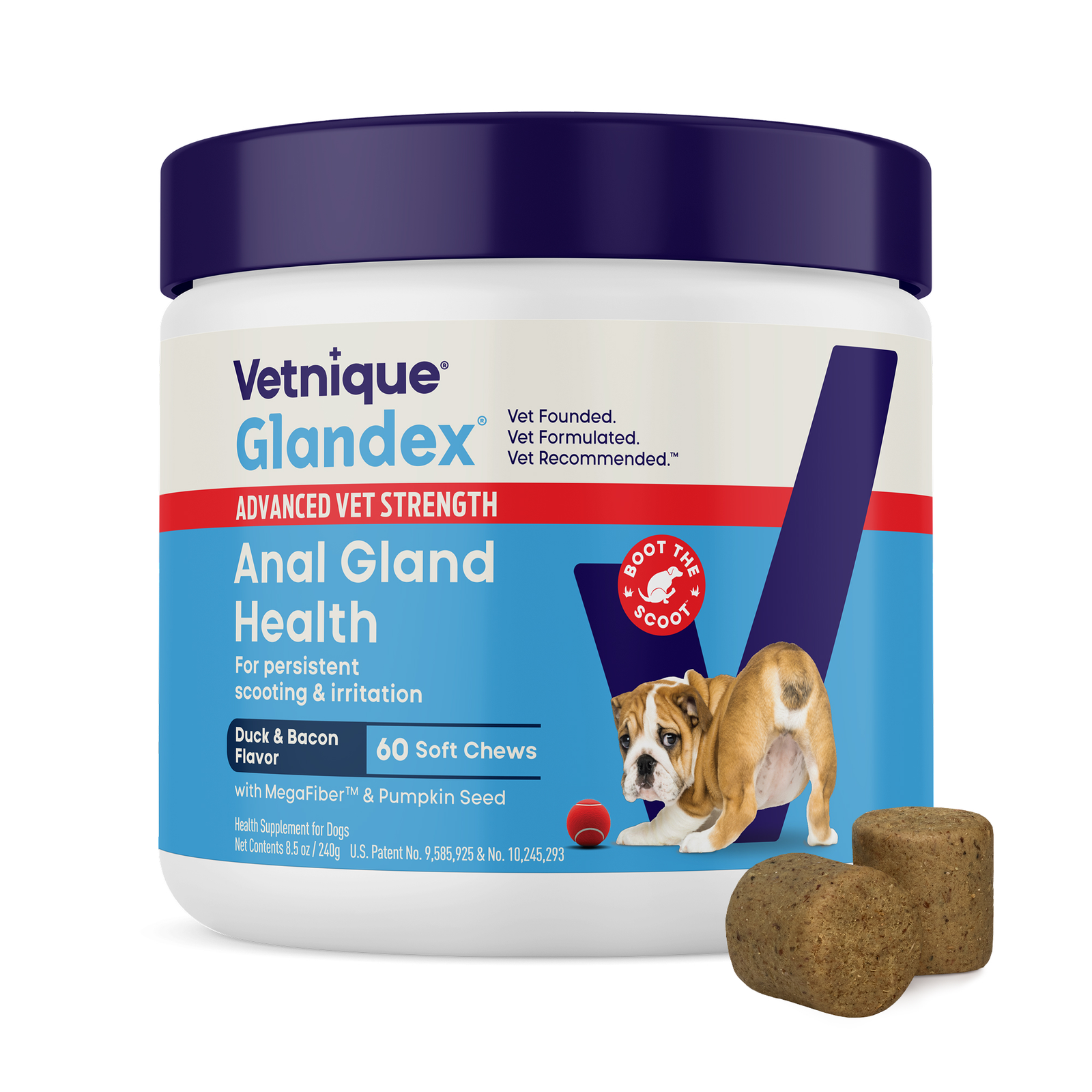
Glandex Soft Chews are veterinarian-formulated specifically to support healthy anal gland function. They combine key ingredients including pumpkin seed, digestive enzymes, probiotics, and fiber to promote firm stools and healthy digestion — the foundation of natural anal gland expression. For dogs with more severe or chronic anal gland issues, Glandex Advanced Vet Strength Chews provide a higher-potency formula. Dogs with digestive sensitivities may also benefit from Glandex Probiotic & Prebiotic Soft Chews, which focus specifically on gut health.
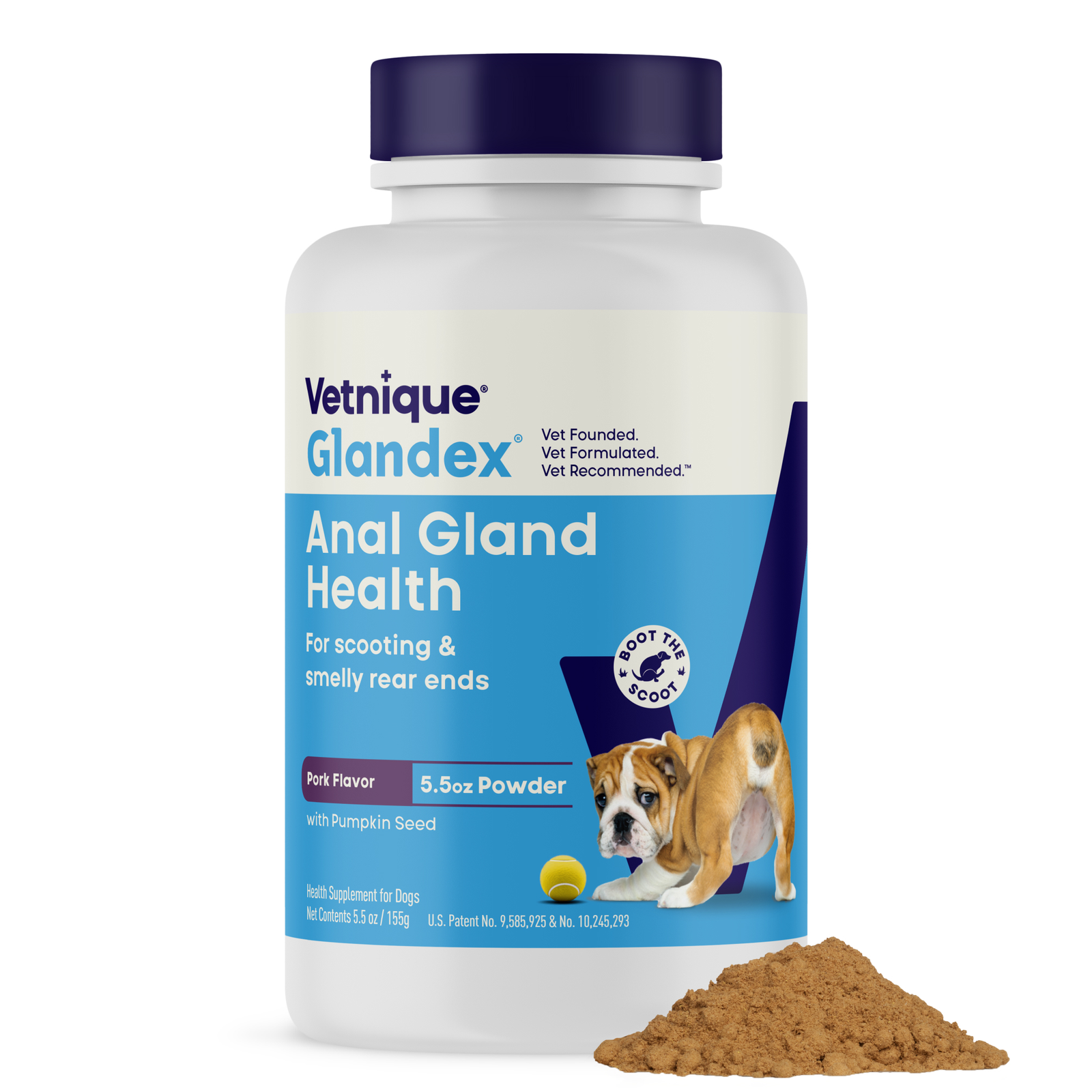
For picky eaters who will not take chews, Glandex Powder can be mixed directly into food. An Advanced Vet Strength Powder option is also available for pets with more persistent issues. And for day-to-day hygiene, Glandex Wipes help keep the area clean and reduce odor between baths.
Explore the full range of anal gland support products in the Glandex collection.
When to See Your Veterinarian
If your pet is scooting persistently, showing signs of pain or discomfort near the rear, leaking foul-smelling fluid, or straining to defecate, schedule a veterinary exam. Your veterinarian can assess whether the glands are impacted, infected, or abscessed and recommend the appropriate treatment.
For a comprehensive guide to anal gland problems including causes, treatment options, and prevention strategies, visit our in-depth resource on anal gland issues in dogs.