

Fiber is one of the most practical tools you can add to your dog's diet. It supports firm stool, healthy digestion, and even plays a direct role in preventing anal gland problems. But not all fiber is the same, and adding too much too fast can backfire. This guide covers gives you all of the information you need about fiber for dogs such as what the best high fiber foods for dogs are, how to safely add fiber to your dog's diet, the different types of fiber, and more.
Why Fiber Is Important for Dogs
Fiber is the indigestible portion of plant-based foods. While your dog's body does not break it down and absorb it the way it does protein or fat, fiber serves several important functions in the digestive system:
- Adds bulk to stool — bulkier, firmer stool is easier to pass and, importantly, creates the pressure needed to empty the anal glands naturally during bowel movements
- Feeds beneficial gut bacteria — certain types of fiber act as prebiotics, nourishing the good bacteria in your dog's gut that support digestion and immune function
- Regulates bowel movements — fiber can help with both ends of the spectrum, firming up loose stool and softening hard stool depending on the type
- Supports healthy weight — fiber adds volume to meals without adding significant calories, which can help dogs that need to feel full while eating less
Soluble vs. Insoluble Fiber For Dogs
There are two types of dietary fiber, and each does something different in your dog's digestive system. Most dogs benefit from a combination of both.
Soluble fiber for dogs
Soluble fiber dissolves in water and forms a gel-like substance in the digestive tract. This gel slows digestion, helps firm up loose or watery stool by absorbing excess water, and serves as food for the beneficial bacteria in the gut. Common sources of soluble fiber for dogs include pumpkin, oat bran, psyllium husk, and cooked sweet potato.
Insoluble fiber for dogs
Insoluble fiber does not dissolve in water. Instead, it adds physical bulk to stool and helps move material through the digestive tract. This is the type of fiber that creates the firm, bulky stool needed for natural anal gland expression. Common sources include green beans, celery, dark leafy greens, carrots, and the skins of fruits and vegetables.
Why the combination matters
A diet with only one type of fiber can create imbalance. Too much soluble fiber alone can make stool overly soft. Too much insoluble fiber alone can cause gas and reduce nutrient absorption. The most effective approach for digestive health is a blend of both types, which is why foods like pumpkin — which naturally contains both soluble and insoluble fiber — are so commonly recommended by veterinarians.
6 Best High-Fiber Foods You Can Add to Your Dog's Diet
The following foods are safe for most dogs and provide meaningful amounts of fiber. Always introduce any new food gradually.
1. Plain canned pumpkin
Pumpkin is the most widely recommended fiber source for dogs. It contains both soluble and insoluble fiber, is palatable to most dogs, and is easy to mix into food. Use plain canned pumpkin — not pumpkin pie filling, which contains added sugar, spices, and sometimes xylitol. Start with about one teaspoon per 10 pounds of body weight per day.
2. Sweet potato
Cooked, peeled sweet potato is rich in fiber and well-tolerated by most dogs. It can be baked, boiled, or steamed — do not add butter, salt, or seasoning. Mash it and mix into your dog's regular food. Start with the same guideline as pumpkin: about one teaspoon per 10 pounds of body weight.
3. Green beans
Plain green beans (fresh, frozen, or canned without added salt) are low in calories and high in insoluble fiber. They are a particularly good option for dogs that need to add fiber without adding significant calories. Chop or break them into pieces appropriate for your dog's size.
4. Carrots
Raw or cooked carrots provide fiber along with vitamins and minerals. Many dogs enjoy them as a crunchy treat. For smaller dogs, chop them into small pieces to avoid a choking risk. Cooked carrots are easier to digest and can be mashed into food.
5. Apples
Apples with the skin on provide both soluble and insoluble fiber. Always remove the seeds and core before feeding to your dog, as apple seeds contain small amounts of cyanide. Slice into appropriate-sized pieces for your dog.
6. Psyllium husk
Psyllium husk is a concentrated soluble fiber source often used in veterinary medicine to manage both diarrhea and constipation. It absorbs water in the gut and forms a gel that helps regulate stool consistency. If using psyllium husk, start with a very small amount — about one-quarter teaspoon for small dogs, one-half teaspoon for medium dogs, and one teaspoon for large dogs — and make sure your dog has access to plenty of fresh water, as psyllium requires water to work properly.
How Much Fiber to Add To Feed To Your Dog
The most common mistake pet parents make with fiber is adding too much too fast. The digestive system needs time to adjust, and too much fiber at once can cause gas, bloating, and loose stool — the opposite of what you are trying to achieve.
Starting fiber amounts by dog size
Use the following as a general starting point when adding whole-food fiber sources like pumpkin or sweet potato to your dog's meals. These amounts are per day, split across meals:
- Small dogs (under 20 lbs) — start with one-half to one teaspoon per day
- Medium dogs (20 to 50 lbs) — start with one to two teaspoons per day
- Large dogs (50 to 80 lbs) — start with one to two tablespoons per day
- Extra-large dogs (over 80 lbs) — start with two to three tablespoons per day
How to increase fiber in your dog's diet
Start at the lower end of the range and maintain that amount for three to five days. If your dog tolerates it well and stool has not become overly soft or gassy, gradually increase to the upper end. If you notice gas, bloating, or softer stool, scale back and increase more slowly.
Signs you have added too much fiber
- Increased gas or flatulence
- Bloating or a distended belly
- Stool becomes softer instead of firmer
- Decreased appetite or disinterest in food with the fiber added
If any of these occur, reduce the amount and give the digestive system a few days to adjust before trying to increase again.
The Connection Between Fiber and Anal Gland Health
One of the most important reasons veterinarians recommend adding fiber to a dog's diet is to support anal gland function. Here is how the two are connected.
Dogs have two small anal glands located on either side of the anus. These glands produce a fluid that is normally expressed during bowel movements when firm stool passes through and presses against them. When stool is soft, small, or loose, the glands do not get the pressure they need to empty. Over time this can lead to overfull glands, impaction, discomfort, scooting, and infection.
Fiber addresses this directly by adding bulk and firmness to stool. A diet with adequate fiber — particularly insoluble fiber — creates the firm, bulky stool that supports natural gland emptying. This is why fiber supplementation is one of the first things veterinarians recommend for dogs with recurring anal gland issues.
For a comprehensive look at anal gland problems and the full range of factors that contribute to them, see our guide to anal gland issues in dogs.
Fiber Supplements vs. Whole Foods For Dogs
Both whole foods and supplements can provide the fiber your dog needs. Each has its advantages, and many pet parents find that a combination works best.
Whole foods
Whole-food fiber sources like pumpkin and sweet potato are affordable, widely available, and provide vitamins and minerals alongside fiber. The drawback is that the amount of fiber per serving varies, measuring and preparing them daily takes effort, and some dogs are picky about having their food mixed with vegetables.
Fiber supplements for dogs
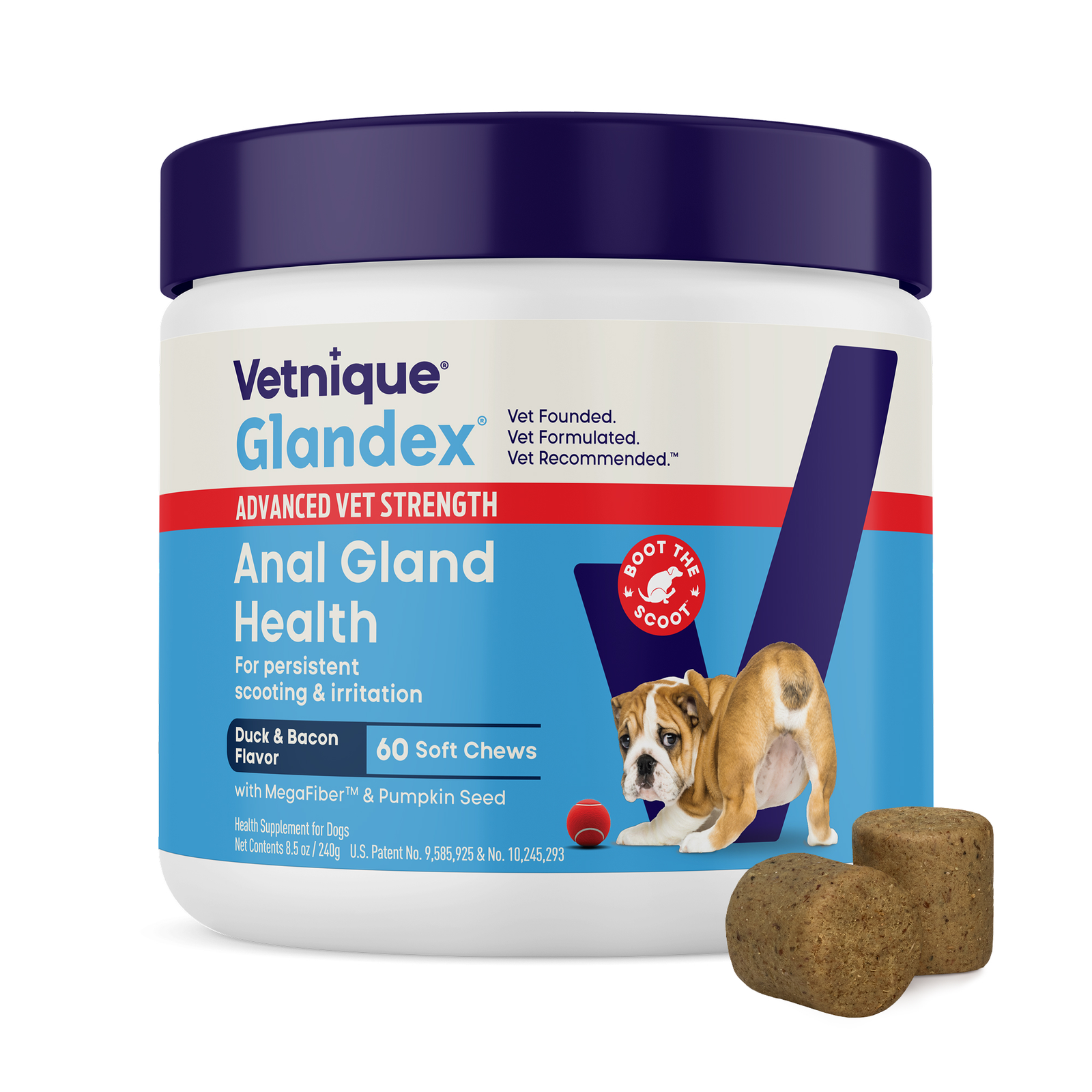
A purpose-built fiber supplement provides a consistent, measured dose of fiber in a format that is easy to give daily. Glandex Soft Chews combine both soluble and insoluble fiber with probiotics and digestive enzymes in a daily chew. This approach addresses stool quality, gut health, and anal gland support in a single step, and the chew format makes it easier to maintain consistency compared to measuring whole foods every day.
For dogs with chronic or more severe anal gland issues that have not responded to standard fiber supplementation, Glandex Advanced Vet Strength Chews provide a higher concentration of active ingredients for more intensive support.
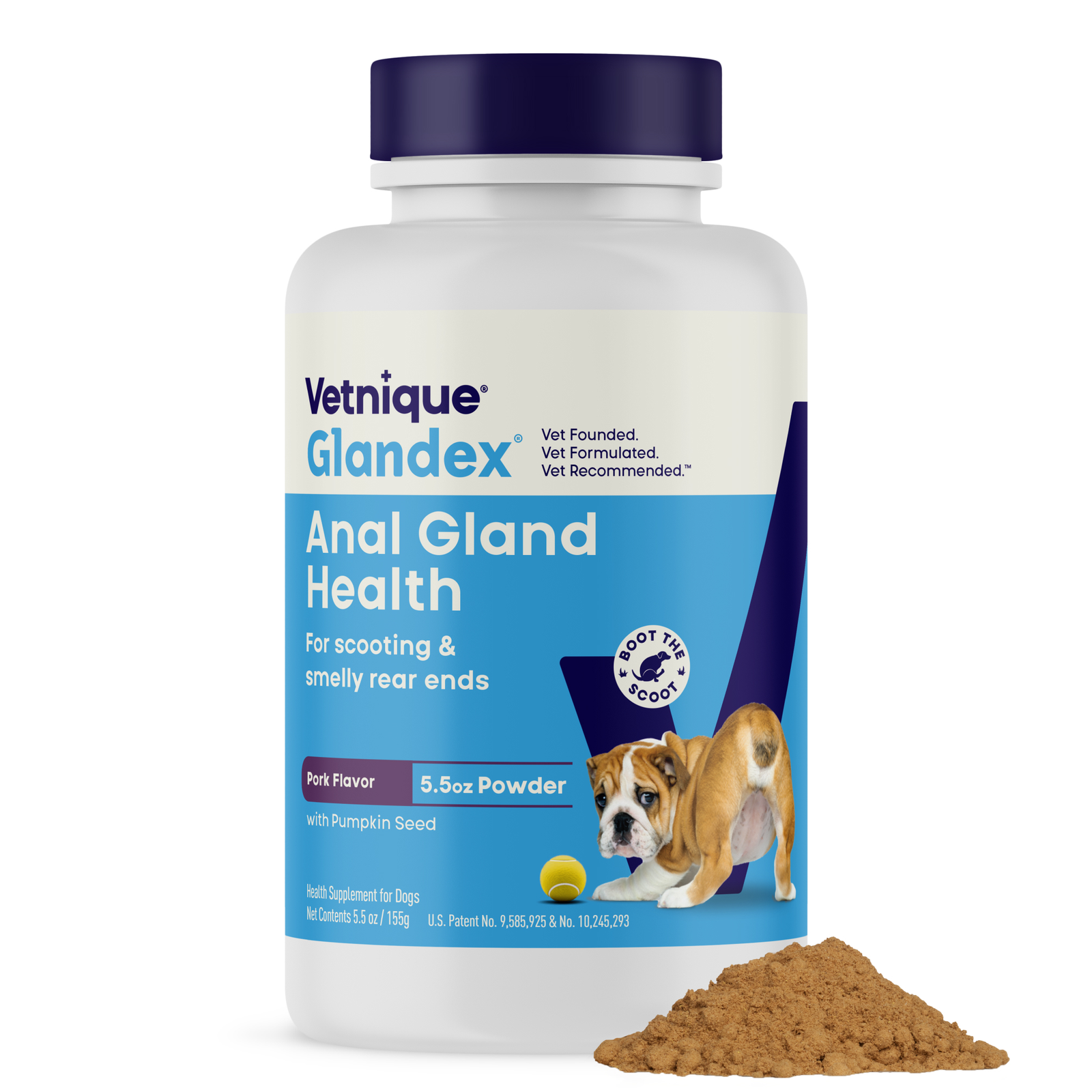
For picky eaters that resist chews, Glandex Powder can be mixed directly into food for the same fiber and digestive support in a format that is easier to disguise.
When to Talk to Your Vet About Fiber
Adding fiber to your dog's diet is generally safe, but there are situations where you should consult your veterinarian first:
- Your dog has a diagnosed gastrointestinal condition such as inflammatory bowel disease (IBD) or pancreatitis
- Your dog is on medication that may interact with dietary changes
- Your dog has diabetes — fiber can affect blood sugar regulation and your vet may need to adjust insulin dosing
- Your dog is losing weight unexpectedly — excess fiber can reduce calorie absorption
- You have added fiber gradually and your dog's stool is not improving or is getting worse — this could indicate an underlying issue that fiber alone will not resolve
Fiber is a practical, effective tool for improving your dog's digestive health and preventing common issues like soft stool and anal gland problems. The key is choosing the right type, starting slowly, and staying consistent.
 ```
```